

Look around the sheet
A sheet behaves like a normal spreadsheet:- Click a cell to select. Double-click to edit.
- Click and drag to select a range. Shift+click column headers to select multiple columns; right-click to bulk-delete or insert.
- Filter by validity, completeness, column presence, or duplicates from the toolbar at the top.
- Pivot a sheet’s rows into columns (or back) when the shape doesn’t match what you want.
- Undo (Ctrl/Cmd+Z) works across the whole workbook, not just the current sheet.
Trace a value back with Check
If you’re not sure where a value came from, open the Check panel on a cell. You’ll see:- The source file and row the value originated from.
- The transformation the agent applied to get it.
- The AI’s plain-English explanation of why it chose that value.
Bulk-fix with chat
For anything bigger than a one-off cell edit, use chat.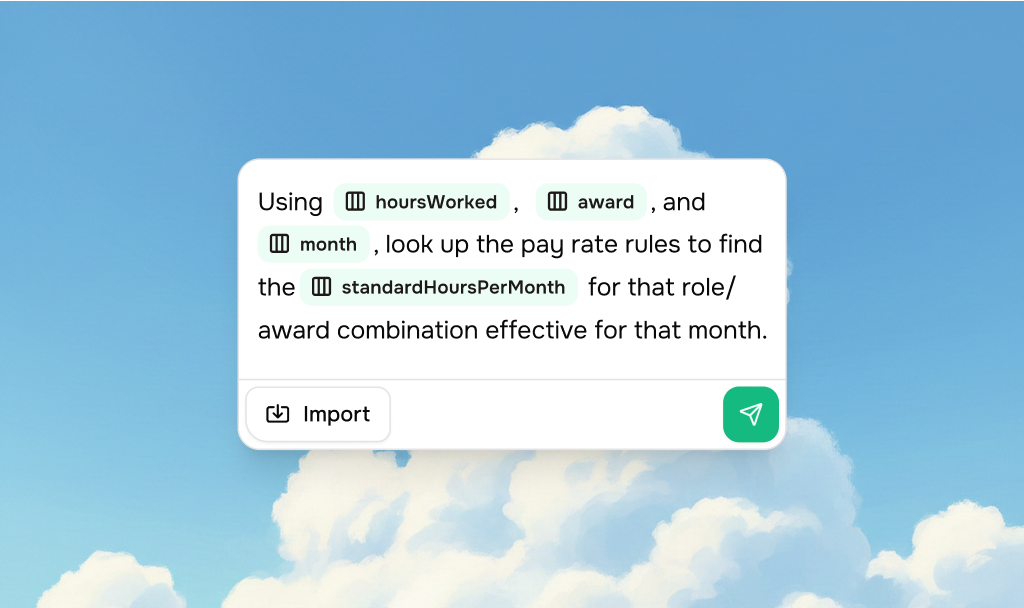
@ and picking from the dropdown (works across sheets). Some examples:
Fix the format of @Phone NumberCombine @First Name and @Last Name into @Full NameExtract emergency contact phone numbers from @Notes into @Emergency PhoneCalculate @Age from @Date of Birth
- Persists across reloads and sheet switches — your conversation is saved.
- Lets you queue the next message while it’s still streaming.
- Lets you stop mid-stream if it’s heading the wrong way.
- Can call multiple tools in one prompt — “do X and then Y” works.
- Shows a preview of multi-step operations before applying them, so you can confirm.
Templates do the heavy lifting
The chat uses your template’s column descriptions and validation rules to know what good data looks like. The better your templates, the better chat’s results. If chat is consistently misinterpreting a column, fix the column’s description.Next
- How import works — to avoid needing to spot-check, get the agent’s input right.